ABC Pharmacy Health Guide
Last updated: July 2026
“Can this mole be removed? Is CO₂ laser suitable, or do I need a different procedure?” These are common questions from patients considering cosmetic mole removal in Da Nang.
A mole that affects your appearance should not automatically be removed without examination. At ABC Dermatology Clinic – Phòng khám da liễu ABC Đà Nẵng, the first step is a clinical mole assessment to help determine whether removal is appropriate and which method may be considered.
Medically Reviewed by the ABC Pharmacy Pharmacist Team
Quick Answer
A mole check before removal in Da Nang may include a visual examination and dermoscopy. CO₂ laser may be discussed for selected lesions that appear clinically benign, while suspicious or changing moles may require surgical removal or biopsy so the tissue can be examined by a pathology laboratory.
Dermoscopy helps the clinician inspect structures and pigment patterns that may be difficult to see with the unaided eye. However, it does not replace a biopsy when there is concern about an abnormal skin lesion.
Medical Safety Alert
Do not apply mole-removal acids, unidentified creams, herbal preparations, or other corrosive substances before a doctor has examined the lesion. Do not cut, burn, freeze, tie off, or shave a mole at home.
Home removal can cause chemical burns, bleeding, infection, scarring, and changes in pigmentation. It may also damage the lesion and make important warning signs more difficult to assess.
Why Is a Mole Check Important Before Removal?
Many moles are benign and may not require treatment. Removal may still be considered when a mole repeatedly catches on clothing, becomes irritated during shaving, or causes a cosmetic concern.
However, not every brown, raised, or pigmented skin lesion is an ordinary mole. Other skin conditions can look similar, and some lesions require closer investigation before any cosmetic procedure is performed.
The purpose of a pre-removal mole check is not simply to choose between laser and surgery. It is to assess whether the lesion appears suitable for cosmetic removal or requires further medical investigation.
How Is a Mole Examined with Dermoscopy?
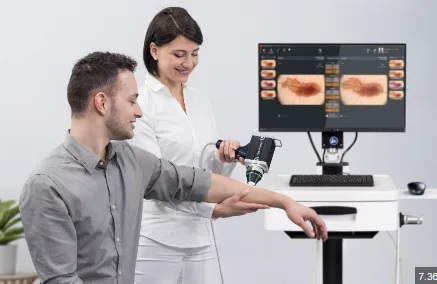
A dermatologist may combine a standard skin examination with dermoscopy. A dermatoscope is a specialized illuminated magnifying device that allows a trained clinician to examine colors, patterns, blood vessels, and structures beneath the surface of a skin lesion.
During the assessment, the clinician may consider:
- Size and symmetry: Whether the two sides of the lesion appear similar or noticeably different.
- Shape and border: Whether the outline appears smooth, regular, uneven, blurred, or notched.
- Color: Whether the lesion has one consistent color or several different shades.
- Surface and structure: Whether it is flat, raised, crusted, ulcerated, or otherwise unusual.
- Location and depth: Factors that may affect the choice of procedure and the likelihood of visible scarring.
- Recent changes: Growth, color change, itching, pain, inflammation, crusting, or bleeding.
The clinician may also ask when the mole first appeared, whether it has changed, whether it has been treated previously, and whether you or a close family member has a history of melanoma or another skin cancer.
CO₂ Laser or Surgical Removal: Which Method Is Appropriate?
There is no single removal method that is suitable for every mole. The recommended approach depends on the lesion’s clinical features, size, depth, location, symptoms, and whether laboratory examination is needed.
When CO₂ laser may be discussed
CO₂ laser treatment may be considered for selected lesions after a clinician has assessed them and believes they are benign and suitable for this technique. The doctor should explain the expected healing process and the possibility of pigment changes, incomplete removal, recurrence, or scarring.
When surgical removal or biopsy may be needed
If a mole has suspicious features, the clinician may recommend removing all or part of it using a biopsy procedure. The sample can then be sent for histopathology, where it is examined under a microscope to help determine the nature of the lesion.
Laser treatment destroys tissue and may not provide an intact sample for laboratory analysis. A suspicious mole should therefore be medically evaluated rather than treated as a routine cosmetic lesion.
What to Do Before Your Mole Removal Appointment
- Leave the lesion untreated: Do not apply removal products, acids, bleaching agents, or traditional remedies before the examination.
- Record any changes: Note when you first noticed the mole and whether it has changed in size, shape, color, sensation, or surface.
- Bring earlier photographs: Previous photos may help the clinician understand whether the lesion has evolved.
- Share your medical history: Mention allergies, bleeding conditions, diabetes, poor wound healing, pregnancy, and medicines or supplements that may affect bleeding.
- Ask about follow-up: Travelers leaving Da Nang soon should discuss wound care, pathology result timing, and how follow-up will be arranged.
International travelers and expats in Vietnam should allow enough time for assessment, treatment, wound care, and any necessary follow-up before continuing their trip.
When to Seek Medical Care Promptly
Arrange a professional skin examination if a mole:
- Appears suddenly or grows noticeably over a short period.
- Changes in shape, border, surface, or color.
- Looks significantly different from your other moles.
- Becomes persistently itchy, painful, inflamed, or tender.
- Bleeds, crusts, ulcerates, or does not heal.
- Returns after previous removal or treatment.
A new, changing, bleeding, or otherwise unusual mole should be assessed by a qualified healthcare professional before laser treatment or cosmetic removal is considered.
Seek urgent medical care after an attempted home removal if you have bleeding that does not stop with firm pressure, rapidly increasing swelling, spreading redness, pus, severe pain, fever, faintness, or another serious reaction. In a medical emergency in Vietnam, call 115.
Why Choose ABC Pharmacy?
- Traveler-friendly coordination: ABC Pharmacy helps tourists and expats navigate local pharmacy and dermatology support in Da Nang.
- English-language assistance: Clear communication can be requested when arranging an appointment or discussing aftercare, subject to staff availability.
- Medicine safety checks: Pharmacists can help review active ingredients, allergies, duplicate products, and relevant medicine precautions.
- Responsible care: Patients are encouraged to obtain a proper skin assessment rather than using unnecessary or potentially harmful mole-removal products.
- Local pharmacy access: ABC Pharmacy can help with appropriate wound-care and pharmacy support after a clinician-led procedure.
- Delivery support when available: Suitable pharmacy items may be delivered to hotels or residences depending on location, availability, and clinical appropriateness.

Frequently Asked Questions
Can every mole be removed with CO₂ laser?
No. CO₂ laser may be considered for selected lesions that appear benign and are clinically suitable. A changing or suspicious mole may require biopsy or surgical removal instead.
What is dermoscopy?
Dermoscopy is a non-invasive examination using an illuminated magnifying device called a dermatoscope. It helps a trained clinician inspect patterns and structures that may not be clearly visible to the unaided eye.
Does dermoscopy confirm whether a mole is cancerous?
Dermoscopy helps clinicians assess a lesion and decide what should happen next, but it cannot always provide a definitive diagnosis. When skin cancer is suspected, a biopsy and pathology examination may be required.
Will mole removal leave a scar?
Any mole-removal procedure can leave a mark, scar, or change in skin color. The likelihood depends on the procedure, lesion depth, body location, skin type, aftercare, and individual healing.
Can tourists book a mole check in Da Nang?
Travelers and expats can request a mole assessment at ABC Dermatology Clinic in Da Nang, subject to appointment availability. Tell the clinic when you are leaving the city so follow-up and any pathology results can be planned appropriately.
Medical disclaimer: This article is for educational purposes only and does not replace diagnosis or treatment by a doctor. Always consult a doctor or pharmacist before using antibiotics, corticosteroids, prescription medicines, or if symptoms are severe, persistent, or worsening.


