ABC Pharmacy Digestive Health Guide
Diarrhea in Hue, Vietnam: How Rehydration and Selected Products Can Support Recovery
October 13, 2026
Diarrhea can leave you tired, uncomfortable and unsure which products you actually need. For travelers and English-speaking residents in Hue, understanding the purpose of each option can make it easier to seek suitable help.
The most important starting point is replacing lost fluids. Other products may help control stool frequency, relieve accompanying gas or provide optional probiotic support, depending on your symptoms.
An anonymous pharmacy enquiry described a young adult with around 10 episodes of diarrhea from the previous day onward, without reported fever, vomiting or bloating. However, stool consistency, blood or mucus, abdominal cramps, nausea and hydration still needed clarification.
This guide explains those screening questions and how the products mentioned in the enquiry may fit into care. It does not present them as a combination that everyone should take.
Medical review pending: ABC Pharmacy Pharmacist Team
Quick Answer: What Helps Most?
Rehydration is the foundation of diarrhea care. Loperamide may reduce loose-stool frequency in suitable adults, simethicone can relieve accompanying gas, and selected probiotics may be considered as additional support. Each has a different purpose.
If approximately 10 loose stools occurred within 24 hours, arrange prompt medical assessment while beginning rehydration. No fever or vomiting does not establish that home treatment is sufficient.
Medical Safety Alert
Check hydration and warning signs before choosing symptom-relief medicines. Blood in the stool, fever, significant abdominal pain, swelling or recent antibiotic use can change what treatment is appropriate.
A medicine that reduces toilet visits does not replace lost water and electrolytes. Likewise, probiotics, dietary products and warming balms should not delay assessment when diarrhea is frequent or worsening.
What Should Be Checked Before Selecting Products?
Sudden diarrhea can have several causes, including infections, contaminated food or water, medicines and other digestive conditions. A symptom description alone cannot confirm the cause.
Questions a Pharmacist or Doctor May Ask
- Are the stools watery, loose or simply softer than usual?
- Is there mucus, blood, pus or a black, tar-like appearance?
- Do you have abdominal cramps? Where is the pain, how strong is it, and does it continue between bowel movements?
- Do you feel nauseated? Nausea may be present even without vomiting.
- How many episodes have occurred during the last 24 hours?
- Can you drink normally, and are you urinating as usual?
- Have you noticed unusual thirst, dizziness or marked weakness?
- Have you measured your temperature?
- Have you recently taken antibiotics, been hospitalized or started a new medicine?
- Did anyone who shared your food become ill?
- Do you have relevant medical conditions, allergies or regular medicines?
Why These Questions Matter
The answers help determine urgency and whether a product has a useful role. For example, gas relief is relevant when bloating is present, while blood, severe pain or recent antibiotic exposure may require a different approach.
Products That May Support Diarrhea Care and Recovery
Understanding what each product does helps avoid unnecessary additions and keeps treatment focused on the symptoms that need attention.
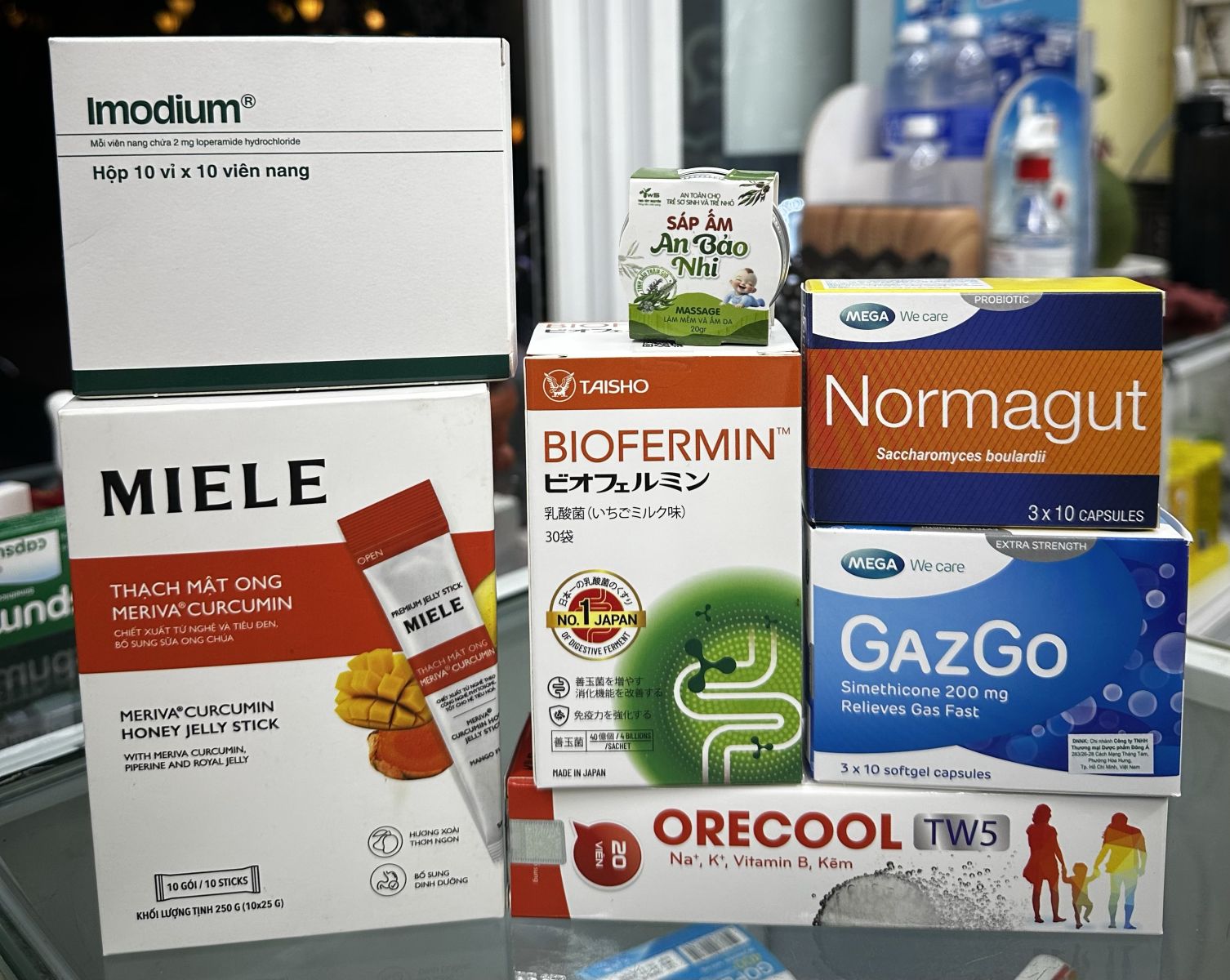 Products discussed in our Hue diarrhea care guide, with different roles in hydration, symptom relief and optional digestive support.
1. Oral Rehydration: Replacing Lost Water and Electrolytes
Oral rehydration solution, or ORS, replaces water and essential salts lost through diarrhea. It supports hydration and helps prevent complications from fluid loss.
ORS is particularly useful when loose stools are frequent. Prepare the packet with the exact quantity of safe water stated on its label, then take frequent drinks while replacing ongoing losses.
Orecool TW5 can be discussed with a pharmacist as an electrolyte-product option. Check its composition and whether it is suitable for diarrhea-related losses or whether a standard medical ORS is needed.
Use 200 mL only if that is the preparation volume printed on the specific packet. A few small drinks per day should not be treated as a complete hydration plan when substantial losses continue.
CDC guidance on rehydration during travelers’ diarrhea.
2. Imodium: Reducing Stool Frequency and Urgency
Imodium contains loperamide, which slows intestinal movement. In suitable adults, it can reduce loose-stool frequency and the urgency to use the toilet.
This short-term relief may make resting or necessary travel more manageable. Continue rehydration even if toilet visits become less frequent.
Check the actual product strength and follow its local instructions, including the maximum daily dose. Adult dosing should not be increased simply because a person has a higher body weight.
Stop when symptoms settle, and do not continue self-treatment beyond 48 hours without medical advice. Excessive doses can cause dangerous heart problems.
Do not self-start loperamide with bloody diarrhea or fever. Abdominal swelling, severe diarrhea after antibiotics and suspected inflammatory bowel disease flare also require assessment.
NHS administration guidance and precautions before use.
3. Gazgo: Relieving Gas and Bloating When Present
Gazgo contains simethicone 200 mg. Simethicone helps small gas bubbles combine, allowing trapped gas to pass more easily. It can relieve gas-related bloating, fullness and discomfort.
This role may be useful when gas symptoms accompany digestive upset. A person reporting diarrhea without bloating may not need a gas-relief product.
Ask the pharmacist to check the supplied pack and explain how to use it if those symptoms are present.
4. Normagut: Optional Probiotic Support
Normagut 250 mg contains Saccharomyces boulardii, a probiotic yeast. Selected probiotic preparations may help reduce symptom severity or duration in some otherwise healthy people.
It may be considered as an adjunct alongside hydration and appropriate care. A pharmacist can assess suitability and explain the dose, duration and administration instructions for the actual product.
People who are critically ill, have weakened immune systems or have central venous catheters should obtain medical advice before taking live probiotics. Mention antifungal medicines during the review.
Normagut information from Nguyen Tri Phuong Hospital and IDSA guidance on probiotic use.
5. Biofermin: Product-Specific Support for Intestinal Health
Depending on the formulation, Biofermin products may contain beneficial microorganisms intended to support intestinal microbial balance. Their ingredients, intended uses and directions differ, so the exact product matters.
If bowel symptoms continue during recovery, bring the packaging or a clear label photograph to a pharmacist. This helps determine whether that preparation is suitable.
A follow-on probiotic is an individual option; switching from Normagut to Biofermin is not a necessary recovery step for everyone.
6. Miele Turmeric Jelly: An Optional Dietary Choice
Miele turmeric jelly may offer a convenient way to consume a turmeric-containing dietary product. Its ingredients and nutritional contribution depend on the exact formulation.
A specific benefit for recovery from acute diarrhea has not been established for the product described. It should therefore be considered an optional dietary choice rather than a core diarrhea treatment.
Turmeric can cause digestive upset, including diarrhea, in some people. Ask a pharmacist about suitability before adding it while symptoms remain active.
NCCIH information on turmeric safety.
7. TW5 Warming Balm: External Comfort When Appropriate
If the specific TW5 warming balm is labeled for this use, its warming sensation may provide temporary external comfort. A pharmacist should check its ingredients and application directions first.
Follow the label, use only on intact skin and avoid swallowing it. Significant, persistent or worsening abdominal pain needs medical assessment rather than massage or a topical product.
How the Main Options Differ
| Option |
Main purpose |
When it may help |
| Medical ORS |
Replace lost water and electrolytes |
During ongoing diarrhea and fluid loss |
| Imodium / loperamide |
Reduce stool frequency and urgency |
Short-term use in appropriately screened adults |
| Gazgo / simethicone |
Relieve trapped gas |
When bloating or gas discomfort accompanies symptoms |
| Selected probiotics |
Provide optional, preparation-specific support |
When appropriate after individual assessment |
Are Antibiotics Part of Routine Care?
Antibiotics are not needed for every episode of diarrhea. A clinician decides whether they are appropriate based on severity, suspected cause and other findings. Frequent stools alone are not a reason to choose an antibiotic without assessment.
Practical Steps to Support Recovery in Hue
Start With Fluids
Use an appropriate ORS and follow its preparation instructions. Keep track of drinking and urination, and seek help if you cannot replace the fluids you are losing.
Eat According to Your Appetite
When you feel able to eat, smaller portions of familiar foods may be easier to manage. You generally do not need to fast or restrict yourself to a very limited diet.
Temporarily reduce coffee and other caffeinated drinks, alcohol, very sweet drinks and fatty meals. If milk or lactose-containing foods worsen symptoms, reduce them during recovery.
NIDDK dietary guidance for diarrhea.
Choose Safe Food and Water
Avoid raw or undercooked seafood and use safe drinking water. Coconut water should not be relied on as a substitute for medical ORS during substantial fluid loss.
Protect Other People
Wash hands thoroughly with soap and water after using the toilet and before eating. Avoid preparing food for others while ill. Follow local guidance for returning to food handling or other activities where infection could spread.
NHS advice on reducing the spread of diarrhea illnesses.
Recovery checklist: replace fluids, monitor symptoms, eat as tolerated and use only products with a clear purpose. Seek assessment if stool frequency remains high or you are getting worse.
When to Seek Medical Care
Arrange Prompt Assessment
NIDDK advises adults to contact a doctor promptly for six or more loose stools in a day, diarrhea lasting beyond two days or signs of dehydration. Around 10 episodes within 24 hours warrants assessment even without fever.
Watch for Warning Signs
- Very little urine, marked dizziness or difficulty drinking enough.
- Blood, pus or black, tar-like stools.
- Severe or persistent abdominal pain or substantial swelling.
- High fever or repeated vomiting.
Confusion, collapse or severe weakness require emergency help. Go to the nearest emergency department instead of waiting for a pharmacy reply.
NIDDK warning signs and referral guidance.
Why Choose ABC Pharmacy for Assistance in Hue?
Understanding unfamiliar product names and instructions can be difficult while traveling. ABC Pharmacy’s enquiry channels can help English-speaking visitors discuss their symptoms and medicine questions.
- English-speaking assistance: explain symptoms and clarify product directions.
- Product identification: check ingredients, strengths and preparation instructions.
- Focused selection: understand which options match your symptoms.
- Responsible support: recognize when medical assessment takes priority.
- Local access enquiries: ask about availability and possible delivery arrangements, subject to confirmation.
Pharmacy assistance supports informed choices and does not replace urgent medical care.
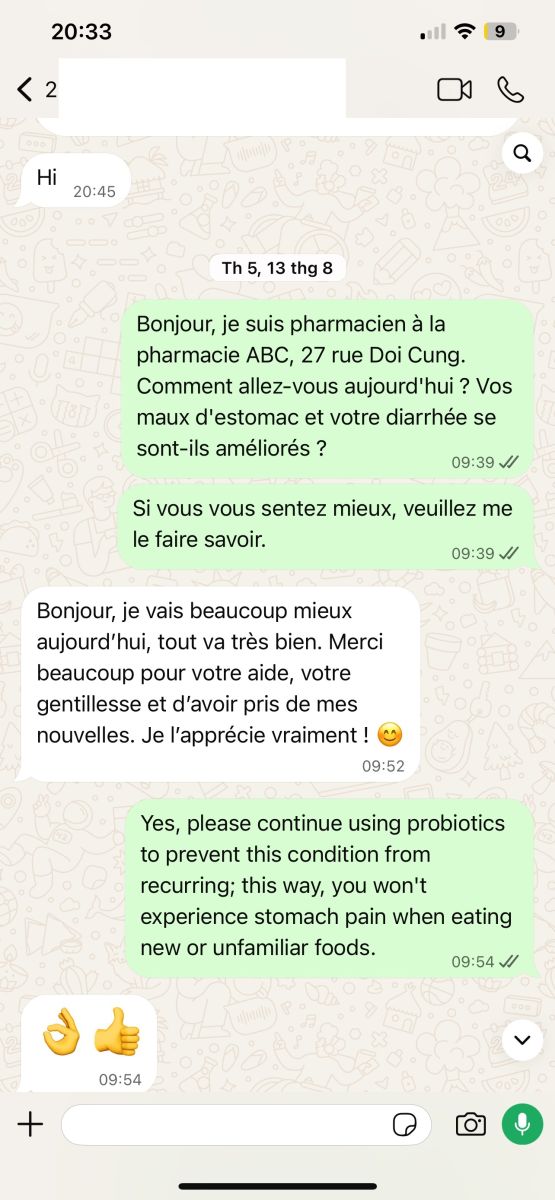 During a follow-up conversation, a customer reports feeling better and thanks the pharmacy for checking on their wellbeing.
Frequently Asked Questions About Diarrhea Support in Hue
1. Which product should I prioritize during diarrhea?
Prioritize appropriate oral rehydration to replace lost water and electrolytes. Other products depend on your symptoms and suitability.
2. How can Imodium help?
Imodium contains loperamide, which may reduce loose-stool frequency and urgency in suitable adults. Continue rehydration and follow the local product instructions.
3. Is Gazgo useful if I do not have bloating?
Gazgo addresses trapped gas, bloating and related discomfort. If those symptoms are absent, a gas-relief product may not be necessary.
4. Should everyone take Normagut followed by Biofermin?
No. Probiotic selection depends on the exact preparation and individual circumstances. Switching products is not a mandatory recovery step.
5. Can diarrhea need medical assessment without fever?
Yes. High stool frequency, dehydration, severe pain or worsening symptoms can require assessment even when fever is absent.
6. What should I send when requesting pharmacy assistance?
Send your age, symptom duration, stools in the last 24 hours, stool appearance, pain, temperature, drinking and urination, recent antibiotics, regular medicines and relevant medical conditions. Include clear product-label photographs if available.
Need Pharmacist Help in Hue?
Looking for help understanding diarrhea products while staying in Hue, Vietnam?
Contact ABC Pharmacy to discuss rehydration options, product ingredients and precautions. Describe your current symptoms so the team can help clarify suitable next steps.
Medical disclaimer: This article provides general educational information and is not a diagnosis or personalized prescription. Product formulations and directions vary. Consult a doctor or pharmacist before choosing medicines, and seek prompt care for frequent, severe, persistent or worsening symptoms.


